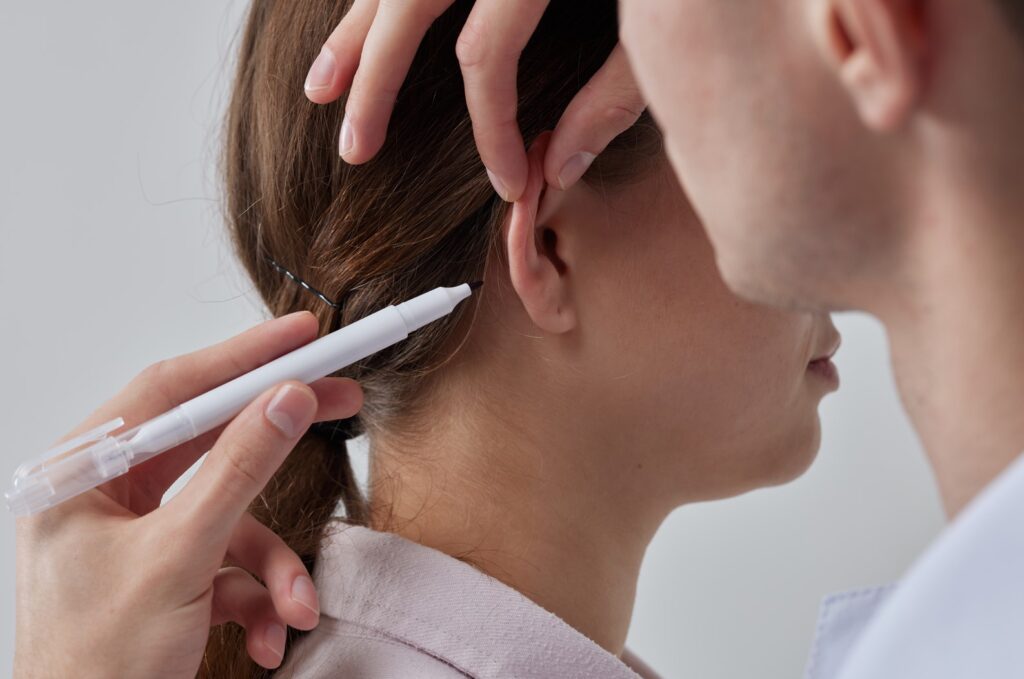
Otoplasty is a surgical procedure designed to correct deformities of the pinna, improve the aesthetic appearance of the ears and, in some cases, solve functional problems. It is a common surgery in both children and adults seeking greater facial harmony or relief from ear-related medical problems. This article explores in depth the key aspects of otoplasty, including indications, surgical techniques, postoperative care, and expected results.
Indications for Otoplasty
Aesthetics
Prominent Ears (Protruding Ears): The most common reason for otoplasty is to correct ears that protrude too far from the head. This condition, often hereditary, can cause insecurity and self-esteem problems, especially in children.
Auricular Asymmetry: Otoplasty can correct ears that are unequal in size, shape or position, creating a more balanced appearance.
Congenital Deformities: Some people are born with auricular deformities, such as constricted ears, split lobes or cartilage malformations, which can be corrected through otoplasty.
Functional
Microtia: It is a congenital deformity where the external ear is underdeveloped. Otoplasty can create a more normal ear structure, improving both hearing appearance and function in some cases.
Trauma: Injuries or accidents that damage the ear may require reconstructive surgery to restore the form and function of the ear.
Lobuloplasty Repair: Correction of torn or elongated lobes due to the use of heavy earrings or accidents.
Preoperative Evaluation
Before surgery, a detailed evaluation is crucial to ensure the success of the procedure and meet the patient’s expectations. Key aspects include:
Medical History: Evaluation of the patient’s general health, history of illnesses, allergies, and any medications they are taking.
Physical Examination: Detailed evaluation of auricular anatomy, including shape, size, symmetry and cartilage structure.
Patient Expectations: Discussion of the patient’s goals and expectations to ensure they are realistic and achievable.
Preoperative Photographs: Take photographs from various angles to plan surgery and evaluate postoperative results.
Otoplasty Surgical Techniques
Incision Otoplasty
This technique involves making an incision in the back of the ear to access the cartilage. The main incision techniques include:
Simple Suture Technique: Permanent sutures are used to reshape and reposition the cartilage, maintaining the new desired shape of the ear.
Cartilage Excision: In some cases, part of the cartilage is removed to reduce the projection of the ear.
Combination of Suturing and Excision: Often, a combination of suturing and excision techniques is used to achieve the desired result.
Otoplasty without Incision
Also known as the auricular molding technique, this technique is less invasive and suitable for correcting minor deformities in infants and young children. It uses external molds and appliances to reshape cartilage without the need for surgery.
Surgical procedure
The otoplasty procedure is usually performed under local anesthesia with sedation or general anesthesia, depending on the age of the patient and the complexity of the case.
Incision: An incision is made in the back of the ear to expose the cartilage.
Cartilage Shaping: Cartilage is reshaped using permanent sutures and, in some cases, a portion of the cartilage is removed to obtain the desired shape.
Incision Closure: The incision is closed with absorbable or removable sutures, and a pressure bandage is applied around the head to protect the ears and keep them in their new position.
Postoperative Care
The success of otoplasty also depends on proper postoperative care. Key considerations include:
Bandages: The initial bandage is replaced after a few days by a lighter elastic band that the patient will have to wear for several weeks, especially at night.
Incision Hygiene and Care: Keeping incisions clean and dry is crucial to preventing infections. It is recommended to use a mild antiseptic and avoid immersion in water until the incisions have completely healed.
Physical Activity: Any activity that could traumatize the ears should be avoided for at least a month. Contact sports and the use of helmets should be avoided.
Pain Control: Postoperative pain is usually managed with oral analgesics. It is normal to experience swelling and bruising that disappears within a few weeks.
Results and Expectations




 Reach us on WhatsApp